
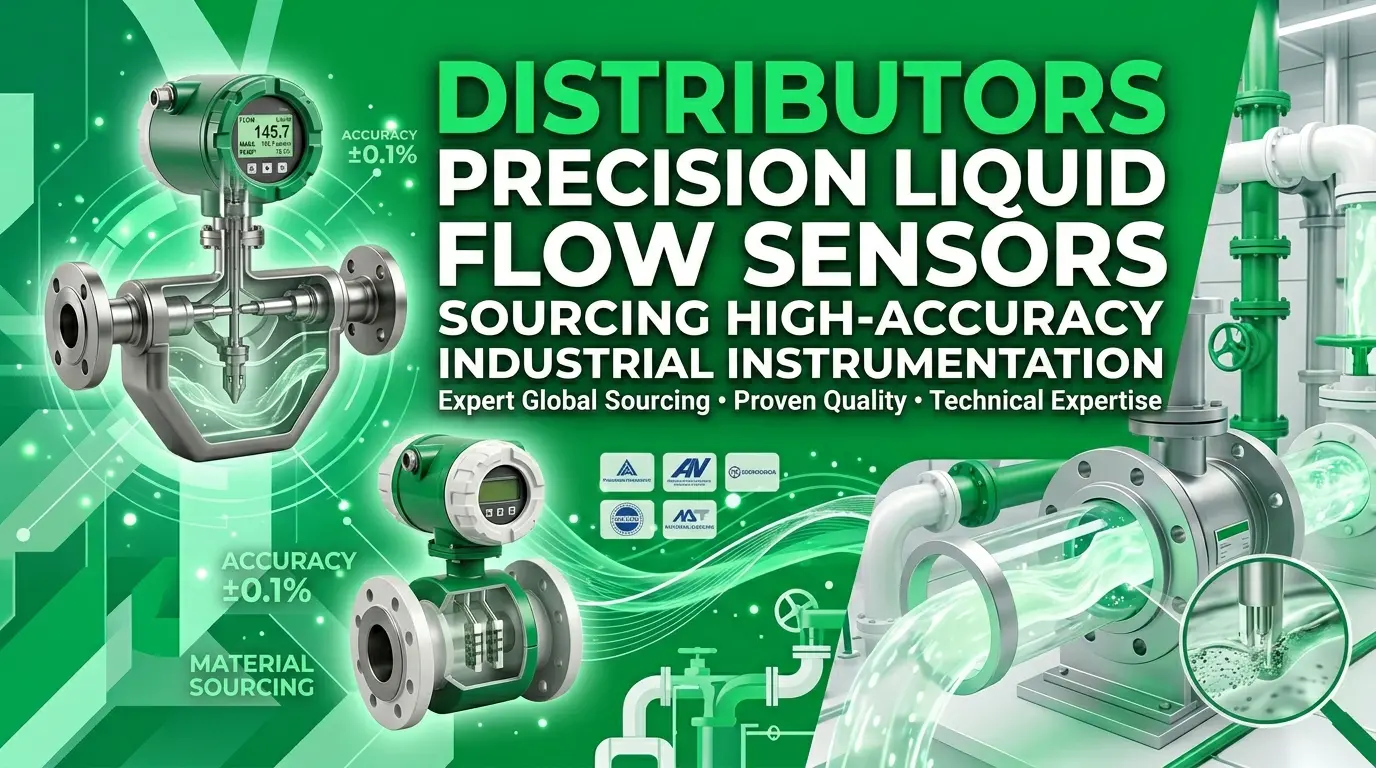
In automated processing and industrial manufacturing, monitoring fluid movement with absolute certainty is critical. For procurement managers and lead engineers, finding dependable distributors precision liquid flow sensors is the first step toward safeguarding system efficiency, protecting sensitive equipment, and maintaining strict quality control.
When dealing with micro-flows, high-purity chemical dosing, or high-pressure manufacturing lines, standard meters are simply not enough. You require precision sensors engineered to deliver reliable data under rigorous operational stress. This guide details how to evaluate high-accuracy sensors and choose a distribution partner capable of supporting your long-term operational goals.
The Strategic Importance of Precision Flow Sensing
Unlike general-purpose flow measurement devices, precision liquid flow sensors are designed to detect minute changes in fluid velocity, mass, or volume. Industrial plants rely on these highly sensitive instruments to manage automated dosing, monitor cooling loops, and prevent catastrophic pump failures.
Key Factors in Precision Evaluation
When consulting with industrial suppliers, engineering teams must evaluate specific performance attributes:
- Repeatability: The ability of the sensor to provide identical readings under unchanged operating conditions.
- Turndown Ratio: The operational range over which the sensor maintains its specified accuracy, from maximum to minimum flow.
- Response Time: How quickly the sensor communicates changes in flow to the central control panel or programmable logic controller.
Advanced Sensor Technologies for High-Precision Applications
Top-tier distributors precision liquid flow sensors typically supply a variety of internal technologies tailored to distinct fluid properties.
Thermal Mass Flow Sensors
These sensors introduce a minimal amount of heat into the fluid stream and measure the temperature differential. Because heat dissipation is directly proportional to mass flow, they excel at detecting low flow rates in high-precision chemical blending.
Vortex Shedding Sensors
By placing a barrier in the fluid path, these sensors generate vortices downstream. The frequency of these vortices is directly proportional to fluid velocity. They have robust mechanical structures and are highly valued for their long-term stability without frequent drift.
Oval Gear Positive Displacement Sensors
These units utilize precision-engineered internal gears that are rotated by the fluid flow. Each rotation pockets and counts a specific volume of liquid, making them exceptionally precise for highly viscous fluids like oils, polymers, and heavy lubricants.
Procurement Matrix: Sensor Selection Guide
To assist your procurement team in mapping the right technology to your pipeline requirements, use this comparative design framework:
| Sensor Technology | Ideal Fluid Viscosity | Mechanical Complexity | Best Suited For |
| Thermal Mass | Low to Medium | Low (No Moving Parts) | Ultra-low flow detection & chemical dosing |
| Vortex Shedding | Low (Water-like fluids) | Medium (Stationary Bluff Body) | High-velocity cooling loops & water management |
| Oval Gear | High (Oils and Polymers) | High (Interlocking Gears) | Viscous fluid measurement & custody transfer |
Compliance and Engineering Standards
Sourcing instrumentation from certified distributors precision liquid flow sensors guarantees that your hardware complies with global safety and operational mandates. Industrial-grade sensors must align with major international frameworks:
- CE and UL Marking: Verifies that the electrical and structural components meet rigorous safety directives.
- RoHS Compliance: Ensures the electronic parts are free from hazardous substances, which is critical for environmental safety.
- NEMA & IP Ratings: Dictates the sensor enclosure’s resistance to water ingress, dust, and corrosive industrial atmospheres.
Industry Insight: “Investing in a high-precision sensor without a certified distribution partner often results in integration failures, as matching sensor outputs to legacy control systems requires deep technical expertise.” — Lead Automation & Control Architect
Verified Social Proof
“Our production line required exact chemical ratios that our old sensors couldn’t stabilize. Sourcing precision thermal sensors resolved our batch consistency issues immediately. The system has run smoothly without a single calibration error since deployment.” — Marcus T., Operations Director
Best Distributors Precision Liquid Flow Sensors: Hebron Perkasa Mandiri
Procuring advanced instrumentation requires more than choosing a part number from a catalog; it demands a partnership with a distributor that understands full-scale system architecture.
Hebron Perkasa Mandiri stands out as a premium source for comprehensive Industrial Fabrication & Maintenance solutions. As a trusted partner for industrial operations, they bridge the gap between world-class manufacturing and local engineering needs. By supplying top-tier distributors precision liquid flow sensors, they provide your technical teams with the exact hardware, calibration support, and maintenance expertise required to eliminate process variables. Protect your plant infrastructure and optimize your production yields by discussing your system specifications with their technical specialists today.
Frequently Asked Questions
What makes a sensor a “precision” liquid flow sensor compared to standard models?
Precision sensors feature highly refined internal components, advanced signal processing, and superior calibrations designed to minimize data drift. They focus heavily on high repeatability and rapid response times, allowing automated systems to adjust to flow fluctuations instantly.
Why is fluid viscosity a deciding factor when choosing a flow sensor?
Viscosity changes how a fluid behaves under pressure and how it interacts with the internal components of a sensor. High-viscosity fluids can cause excessive pressure drops in certain sensor designs, while low-viscosity fluids might slip past mechanical clearances in others.
How do digital communication protocols impact sensor selection?
Modern precision sensors do not merely output simple analog signals. Many utilize advanced digital communication networks like Modbus, Profibus, or IO-Link. These protocols allow the sensor to transmit diagnostic data, temperature readings, and error logs directly to your control system.
Can these precision sensors be deployed in outdoor or washdown environments?
Yes, provided they feature the correct industrial enclosure ratings. Sensors designed for harsh environments or frequent washdowns typically carry heavy-duty ingress protection ratings to ensure internal electronics remain completely sealed against moisture and dust.
How can I request a technical consultation or a quote for bulk sensor procurement?
You can contact the engineering team at Hebron Perkasa Mandiri. As a full-service provider of Industrial Fabrication & Maintenance solutions, they offer comprehensive technical support to help you select, install, and maintain precision flow sensors tailored specifically to your plant layouts.

Related Posts
Juli 13, 2026
SUTO Distributor and Reseller: Premium Industrial Solutions
In modern industrial facilities, monitoring the efficiency and purity of compressed air and gas systems…
Juli 13, 2026
Industrial Digital Power Measurement Tools: The Definitive Guide to Energy Intelligence and Efficiency
In modern industrial facilities, energy is one of the highest operational costs. For electrical engineers,…

Juli 6, 2026
Simulasi Keadaan Tanggap Darurat (KTD) Kebakaran PT Hebron Perkasa Mandiri Perkuat Budaya K3 di Lingkungan Kerja
Tangerang Selatan, 2 Juli 2025 – PT Hebron Perkasa Mandiri menyelenggarakan Simulasi Keadaan Tanggap Darurat…
Juli 6, 2026
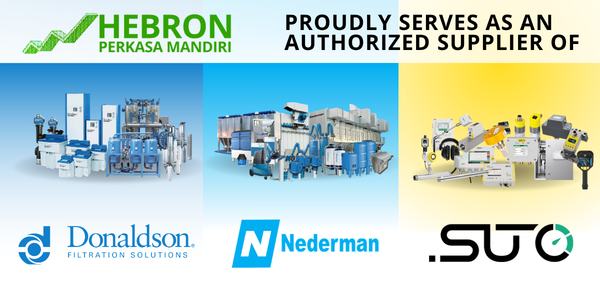
PT Hebron Perkasa Mandiri: Authorized Distributor Donaldson & Nederman | SUTO iTEC Partner
PT Hebron Perkasa Mandiri merupakan Authorized Distributor Donaldson dan Nederman serta SUTO iTEC Partner yang…