
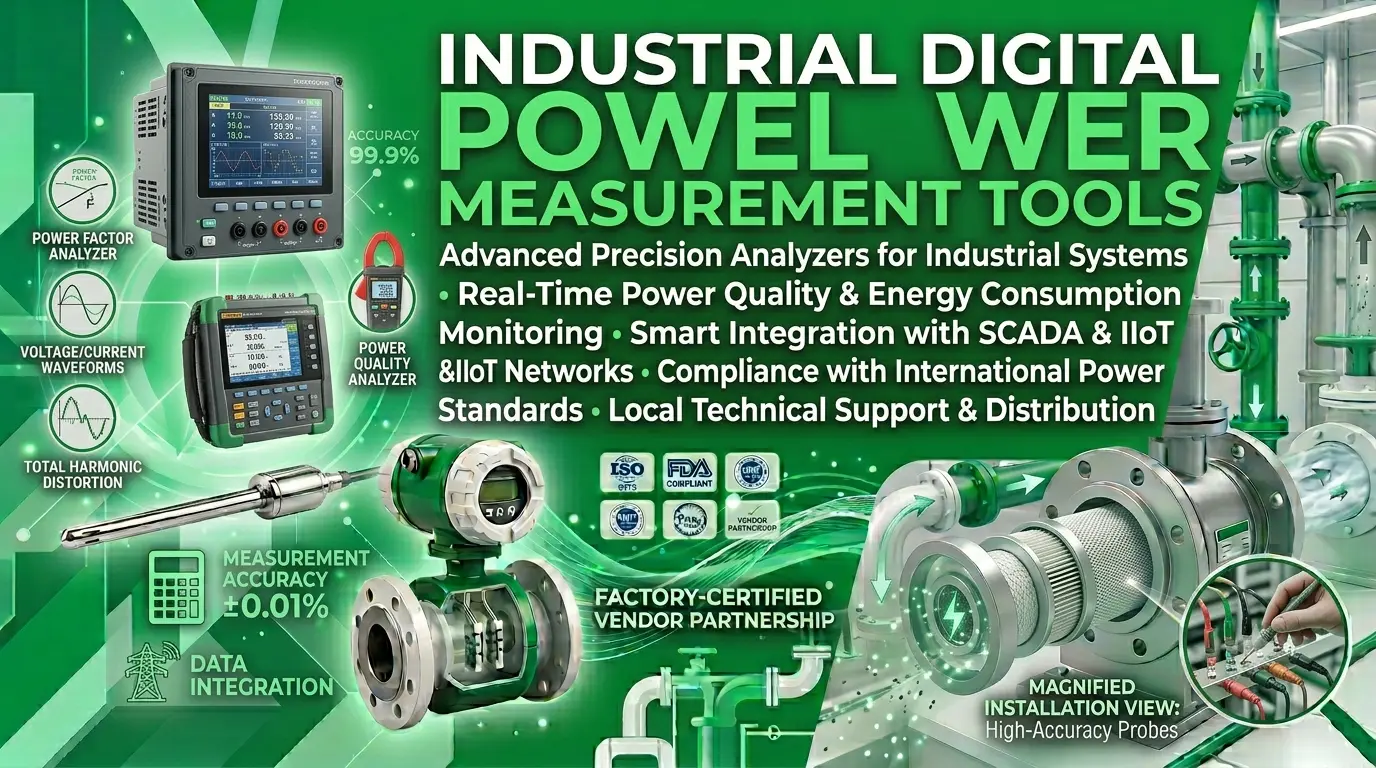
In modern industrial facilities, energy is one of the highest operational costs. For electrical engineers, plant supervisors, and maintenance directors, deploying advanced industrial digital power measurement tools is no longer optional it is the foundation of smart manufacturing. Relying on outdated analog meters makes it impossible to detect subtle electrical anomalies, trace power quality issues, or optimize energy consumption across heavy machinery loops.
From automated assembly lines and steel fabrication plants to large-scale processing facilities, precise energy data is critical. This comprehensive guide details how modern industrial digital power measurement tools work, the primary technologies available, and how these instruments prevent expensive electrical system failures.
Why Modern Infrastructure Demands Industrial Digital Power Measurement Tools
Industrial power distribution networks face constant stress from heavy motor startups, variable frequency drives, and continuous automated loads. Without robust industrial digital power measurement tools monitoring your sub-panels, your facility remains vulnerable to invisible power quality degradation, leading to premature motor wear and sudden breaker trips.
Critical Operational Risks Managed by Industrial Digital Power Measurement Tools
Implementing specialized industrial digital power measurement tools helps your engineering team manage several key electrical hazards:
- Power Factor Inefficiencies: Monitoring inductive loads to prevent penalty charges from utility companies due to poor power factor metrics.
- Harmonic Distortion Overheating: Detecting electrical harmonics that cause transformers, neutral lines, and switchgear to overheat without warning.
- Phase Imbalance Identification: Utilizing industrial digital power measurement tools to ensure voltage and current are balanced equally across all phases, protecting sensitive three-phase motors.
Technical Breakdown: Types of Industrial Digital Power Measurement Tools
A leading distributor of electrical monitoring systems supplies various specialized instruments designed for distinct panel configurations and data gathering needs.
Panel-Mounted Power Quality Analyzers
Permanently integrated into main distribution switchboards, these high-end industrial digital power measurement tools capture comprehensive electrical parameters continuously. They feature clear digital screens and robust communication modules to send data back to your central control room.
DIN-Rail Sub-Meters
Compact and designed for space-restricted sub-panels, these industrial digital power measurement tools are ideal for tracking energy usage on specific production lines or individual machines. They allow plant managers to allocate energy costs accurately across different manufacturing departments.
Portable Digital Power Meters
Used primarily for maintenance audits and troubleshooting, these handheld or case-bound industrial digital power measurement tools allow field engineers to temporarily hook up to live lines, record electrical performance data, and diagnose active system faults without altering panel structures permanently.
Equipment Selection Matrix: Electrical Monitoring Systems
To assist your procurement and electrical engineering teams, this guide outlines the primary applications for various industrial digital power measurement tools:
| Tool Architecture | Installation Style | Primary Data Output | Best Suited Applications |
| Panel-Mounted Analyzers | Permanent Switchboard Cutout | Full harmonic analysis, transients, and waveform capture | Main facility intake lines and critical plant transformers |
| DIN-Rail Sub-Meters | Permanent Internal Rail Mount | Energy consumption, voltage, and current tracking | Individual production lines, specific machinery, and billing |
| Portable Meters & Clamps | Temporary Non-Invasive Hookup | Real-time spot checks and electrical logging data | Maintenance diagnostics, energy audits, and field repair |
Engineering Compliance and Trust Factors
When sourcing industrial digital power measurement tools, verifying that the instrumentation complies with international safety and measurement codes is vital to protect your workforce and ensure data integrity. Premium monitoring tools must align with global engineering frameworks:
- IEC Measurement Standards: The international benchmark defining the accuracy classes and performance requirements for electrical power meters.
- CE and UL Safety Markings: Ensures that the internal electronic components of your industrial digital power measurement tools can safely handle high-voltage industrial surges.
- IEEE Power Quality Recommendations: Guides engineering teams on how to interpret data gathered by your meters regarding harmonics and voltage sags.
Industry Insight: “Installing low-grade meters without proper safety certifications poses a massive explosion risk inside high-voltage switchgear rooms during transient voltage spikes.” Lead Electrical Automation Engineer
Real-World Social Proof
“Our facility faced recurring automated system resets that our maintenance team couldn’t explain. Installing advanced industrial digital power measurement tools allowed us to pinpoint brief voltage sags caused by a faulty compressor motor upstream. Fixing the motor eliminated our downtime completely.” Taufik H., Electrical Maintenance Supervisor
Your Engineering Integration Partner: Hebron Perkasa Mandiri
Sourcing advanced electrical instrumentation requires more than picking a model from a generic brochure; it requires an engineering partner capable of aligning hardware capabilities with your factory’s electrical architecture.
Hebron Perkasa Mandiri stands out as a premier provider of comprehensive Industrial Fabrication & Maintenance solutions. As a trusted distribution and technical support partner, they help your facility select, configure, and deploy high-performance industrial digital power measurement tools.
Their technical specialists assist your teams in choosing the right current transformers, selecting appropriate digital communication protocols like Modbus or Profibus, and integrating new meters into your existing plant management systems. Protect your electrical infrastructure and lower your energy overhead by contacting their engineering consultation team today.
Frequently Asked Questions (FAQ)
What is the main purpose of industrial digital power measurement tools?
The primary purpose is to continuously track, analyze, and record electrical parameters like voltage, current, power factor, and energy consumption. This helps facilities manage costs, improve safety, and prevent machinery breakdowns.
How do industrial digital power measurement tools help lower monthly energy bills?
By tracking real-time power factor data, these tools allow engineers to optimize capacitor banks and avoid utility penalties. They also pinpoint specific energy-wasting machines that require maintenance or replacement.
Can these digital meters communicate with existing factory automation networks?
Yes, professional industrial digital power measurement tools come equipped with advanced digital communication interfaces. They easily transmit real-time data to Programmable Logic Controllers (PLCs) or overarching plant control systems.
What is the difference between standard digital meters and power quality analyzers?
Standard meters track basic energy usage data for billing purposes. Power quality analyzers are more advanced tools that measure deep electrical variables like harmonic distortion, voltage transients, and wave micro-disruptions.
How can my plant request a consultation for industrial digital power measurement tools?
You can reach out directly to the engineering team at Hebron Perkasa Mandiri. As a provider of comprehensive Industrial Fabrication & Maintenance solutions, they offer complete system reviews, hardware selection, and integration support tailored to your plant’s power grid layout.

Related Posts
Juli 13, 2026
SUTO Distributor and Reseller: Premium Industrial Solutions
In modern industrial facilities, monitoring the efficiency and purity of compressed air and gas systems…

Juli 6, 2026
Simulasi Keadaan Tanggap Darurat (KTD) Kebakaran PT Hebron Perkasa Mandiri Perkuat Budaya K3 di Lingkungan Kerja
Tangerang Selatan, 2 Juli 2025 – PT Hebron Perkasa Mandiri menyelenggarakan Simulasi Keadaan Tanggap Darurat…

Juli 6, 2026
PT Hebron Perkasa Mandiri: Authorized Distributor Donaldson & Nederman | SUTO iTEC Partner
PT Hebron Perkasa Mandiri merupakan Authorized Distributor Donaldson dan Nederman serta SUTO iTEC Partner yang…

Juli 6, 2026
PT Hebron Perkasa Mandiri Gelar Corporate Social Responsibility (CSR) 2025 : Menguatkan Komitmen untuk Tumbuh Bersama Masyarakat
PT Hebron Perkasa Mandiri melaksanakan Corporate Social Responsibility (CSR) pada 7 Juli 2025 melalui pembagian…