
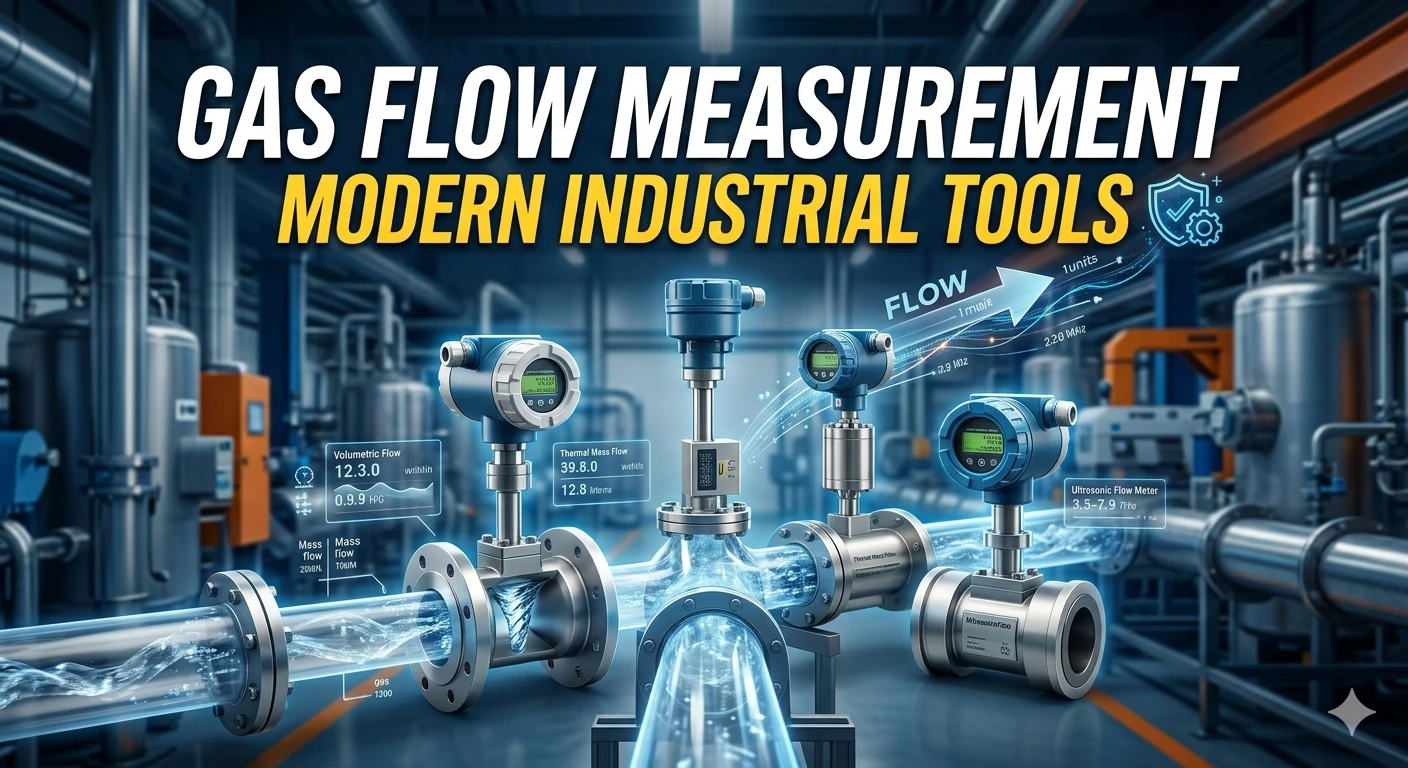
Accuracy in measuring gas flow isn’t just about data; it’s about safety, cost control, and regulatory compliance. Whether you are managing natural gas distribution, chemical processing, or HVAC systems, choosing the right industrial gas flow measurement tools determines the reliability of your entire infrastructure. Hebron Perkasa Mandiri understands that a 1% margin of error can translate into thousands of dollars in lost revenue or critical system failures.
Industrial Gas Flow Measurement Tools: Why Precision Matters Now
The primary goal of gas flow measurement is to quantify the mass or volume of a gas moving through a closed conduit. Unlike liquids, gases are highly compressible, meaning temperature and pressure fluctuations can drastically alter readings. Modern industrial standards now demand meters that provide real-time compensation for these variables to ensure “settlement quality” data.
Primary Types of Industrial Gas Flow Meters
To select the Industrial Gas Flow Measurement Tools right tool, you must match the sensor technology to the specific properties of the gas and the environment of the installation.
- Thermal Mass Flow MetersThese tools use the thermal conducting properties of gas to measure flow. They are ideal for low-flow applications and air-intake systems because they measure mass flow directly without needing additional pressure or temperature sensors.
- Vortex Shedding Flow MetersHighly durable with no moving parts, these meters measure the “vortices” created when gas passes a shedder bar. They excel in high-temperature and high-velocity steam or gas applications.
- Turbine Flow MetersUtilizing a rotor that spins as gas passes, these are the gold standard for high-pressure custody transfer. They offer exceptional repeatability but require clean gas to prevent mechanical wear.
- Ultrasonic Flow MetersUsing sound waves to determine velocity, these are non-invasive and provide a wide turndown ratio. They are increasingly popular in large-diameter pipelines where maintenance access is limited.
Technical Specification Comparison Table
Selecting a meter requires balancing accuracy against environmental constraints. Use this table as a baseline for your procurement process:
| Meter Type | Typical Accuracy | Pressure Drop | Moving Parts | Best Use Case |
| Thermal Mass | ±1.0% | Low | No | Aeration, Flare Gas |
| Vortex | ±0.75% | Medium | No | Dry Gas, Steam |
| Turbine | ±0.25% | High | Yes | Custody Transfer |
| Ultrasonic | ±0.5% | Negligible | No | Large Pipelines |
Industry Standards and Compliance
At Hebron Perkasa Mandiri, we ensure all recommended instrumentation aligns with global benchmarks. Reliability in the field is dictated by adherence to:
- AGA (American Gas Association) Reports: Specifically AGA 3, 7, and 9 for orifice, turbine, and ultrasonic measurement.
- ISO 5167: For pressure differential devices.
- ASME MFC Standards: Covering the measurement of fluid flow in closed conduits.
Field Note: Always verify the “Turndown Ratio.” A meter with a 100:1 ratio will remain accurate even when gas flow drops significantly during off-peak hours, preventing “unaccounted-for” gas losses.
Real-World Impact: What Our Partners Say
Our commitment to technical excellence is reflected in the success of our clients across Indonesia.
“Implementing the vortex systems recommended by Hebron Perkasa Mandiri reduced our steam wastage by 14% within the first quarter. Their technical team understands the nuances of local industrial environments.”
— Budi S., Operations Manager, Chemical Processing Plant
FAQ: Industrial Gas Flow Measurement
1. How often should industrial gas flow meters be calibrated?
Most industrial standards suggest an annual calibration, though high-accuracy custody transfer meters may require semi-annual verification depending on throughput volume.
2. Can one meter handle different types of gases?
Thermal mass meters are usually factory-calibrated for a specific gas mix. However, ultrasonic and vortex meters are more versatile across different gas compositions, provided the physical properties are programmed into the transmitter.
3. What is the difference between Actual (ACFM) and Standard (SCFM) flow?
ACFM measures the volume at the current operating pressure and temperature. SCFM corrects that volume to a standard “base” condition (usually 14.7 PSIA and 60°F), allowing for consistent billing and reporting.
4. Are moving parts a disadvantage in gas measurement?
In “dirty” gas environments (containing particulates or moisture), moving parts like turbine rotors can wear down or seize. In such cases, no-moving-part technologies like Vortex or Thermal are preferred.
5. Does pipe orientation affect accuracy?
Yes. Most meters require a specific length of straight pipe run (upstream and downstream) to eliminate turbulence. Some technologies, like ultrasonic, are more sensitive to orientation than others.
Expert Support for Your Infrastructure
Hebron Perkasa Mandiri provides end-to-end solutions for industrial measurement and safety. Our engineers are ready to assist you in calculating the ROI of upgrading your flow measurement technology to ensure your operations remain lean, safe, and compliant.
Related Posts
Juli 13, 2026
SUTO Distributor and Reseller: Premium Industrial Solutions
In modern industrial facilities, monitoring the efficiency and purity of compressed air and gas systems…
Juli 13, 2026
Industrial Digital Power Measurement Tools: The Definitive Guide to Energy Intelligence and Efficiency
In modern industrial facilities, energy is one of the highest operational costs. For electrical engineers,…
Juli 6, 2026
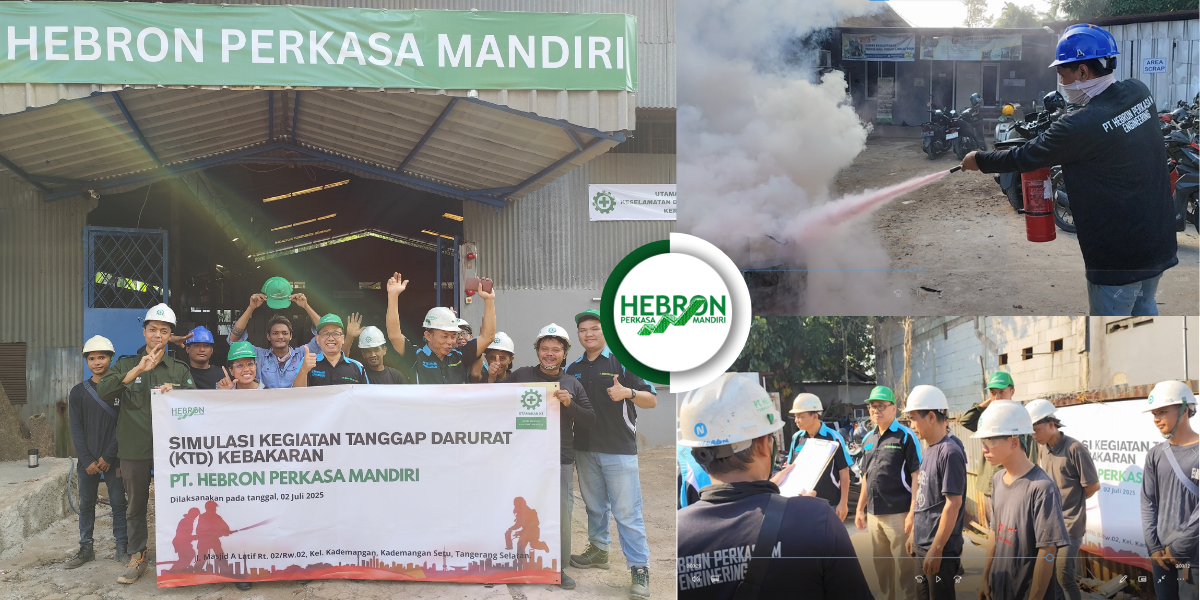
Simulasi Keadaan Tanggap Darurat (KTD) Kebakaran PT Hebron Perkasa Mandiri Perkuat Budaya K3 di Lingkungan Kerja
Tangerang Selatan, 2 Juli 2025 – PT Hebron Perkasa Mandiri menyelenggarakan Simulasi Keadaan Tanggap Darurat…
Juli 6, 2026
PT Hebron Perkasa Mandiri: Authorized Distributor Donaldson & Nederman | SUTO iTEC Partner
PT Hebron Perkasa Mandiri merupakan Authorized Distributor Donaldson dan Nederman serta SUTO iTEC Partner yang…