
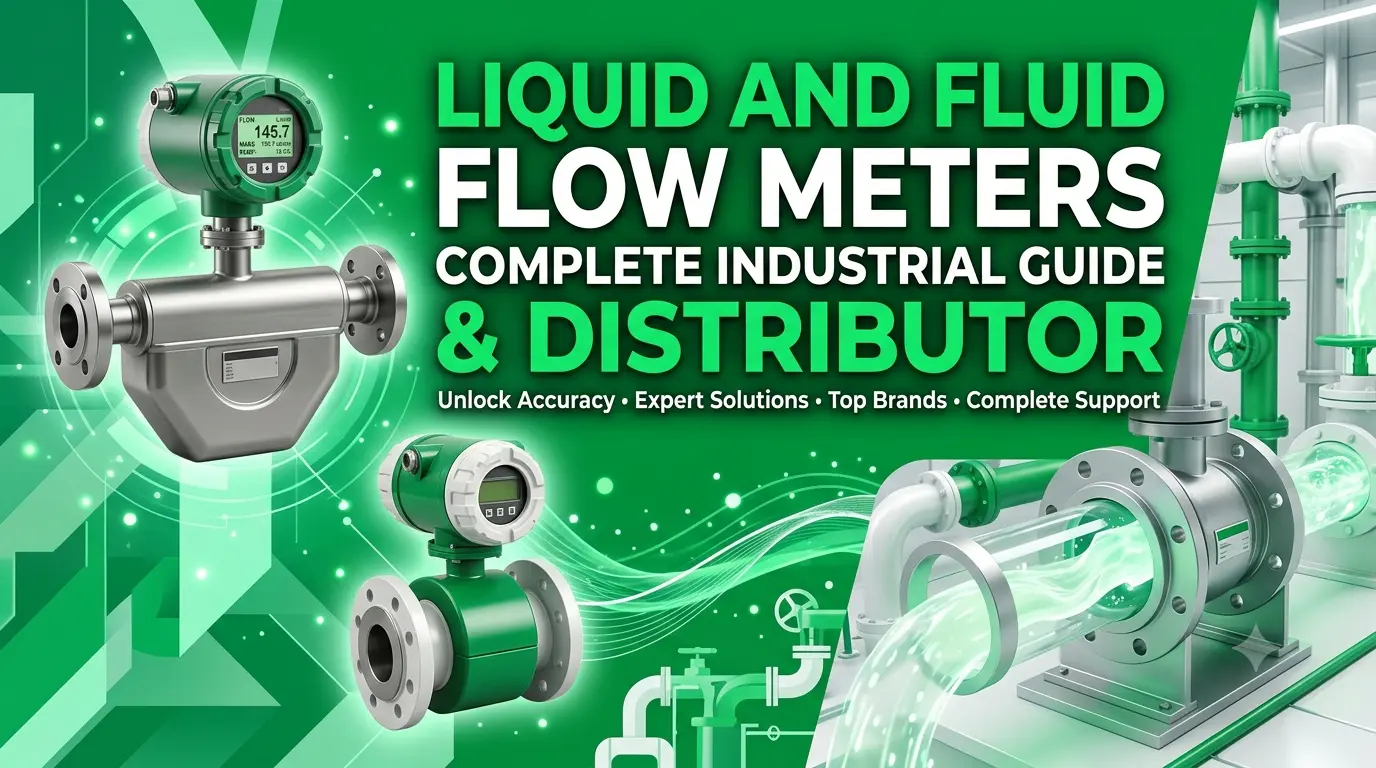
In modern industrial processing, accuracy isn’t just a metric it is the baseline for safety, efficiency, and profitability. Whether you are managing chemical processing, oil and gas refining, water treatment, or food and beverage production, choosing the right liquid and fluid flow meter is critical to optimizing your operations. A single miscalculation in flow rate can lead to costly system downtime, compromised product quality, or significant material waste.
To help you navigate the complexities of fluid dynamics, this comprehensive guide breaks down the essential types of flow meters, operational considerations, and industrial standards required to make an informed procurement decision.
Why Flow Measurement Accuracy Dictates Industrial Success
Every industrial process relies on a specific type of fluid movement. However, “fluid” is a broad term encompassing low-viscosity liquids like water, highly corrosive acids, and thick, non-Newtonian slurries. Selecting a generic liquid and fluid flow meter without considering specific fluid characteristics can lead to system failure.
The Science Behind Fluid Dynamics
To match a meter to your application, engineering teams must evaluate several critical variables:
- Viscosity and Density: How the fluid resists shear deformation.
- Flow Profile: Whether the movement within the pipeline is smooth and parallel or irregular and turbulent.
- Corrosiveness and Abrasiveness: Dictates the chemical compatibility of the meter’s wetted parts to prevent erosion.
Technical Breakdown: Types of Liquid and Fluid Flow Meters
Different applications require different measurement technologies. Here are the most reliable industrial flow meters utilized today.
Electromagnetic Flow Meters (Magmeters)
Operating on the principles of electromagnetic induction, magmeters are ideal for conductive liquids, wastewater, and slurries. Because they have no moving parts, they present zero obstruction to the flow, resulting in negligible pressure drops.
Coriolis Mass Flow Meters
Coriolis meters measure true mass flow rather than volume, making them incredibly precise. As fluid moves through a vibrating tube, it induces a measurable twist proportional to the mass flow rate. They are highly valued in chemical custody transfers where density varies with temperature fluctuations.
Ultrasonic Flow Meters
These non-intrusive devices clamp onto the outside of the pipe, utilizing acoustic waves to calculate velocity. They are perfect for retrofitting existing systems where cutting into the pipeline is not an option.
Turbine Flow Meters
Utilizing a rotor suspended in the fluid stream, the rotational speed of the turbine is directly proportional to fluid velocity. These are highly efficient for clean, low-viscosity fluids like hydrocarbons and pure water.
Specification Comparison Table
To streamline your engineering and procurement selection, use this quick-reference specification matrix:
| Flow Meter Type | Fluid Suitability | Mechanical Design | Primary Advantage |
| Coriolis Mass | Liquids, Gases, Slurries | Vibrating Tubes | Measures mass, density, and temperature simultaneously |
| Electromagnetic | Conductive Liquids & Slurries | No Moving Parts | Zero pressure drop, low maintenance |
| Turbine | Clean, Low-Viscosity Liquids | Internal Rotor | High repeatability and fast response times |
| Ultrasonic | Clean or Aerated Fluids | External Clamp-On | Non-invasive design, no process interruption |
Industrial Standards and Compliance
When sourcing a liquid and fluid flow meter, compliance with global engineering standards is necessary to ensure safety and regulatory alignment. Reliable systems must comply with:
- AGA & API Standards: Crucial for custody transfer and oil/gas measurement accuracy.
- ISO / OIML Regulations: International standards ensuring precision in water measurement instrumentation.
- ATEX / IECEx Certifications: Vital for equipment operated in explosive or hazardous industrial environments.
Industry Insight: “Choosing a flow meter without verifying its calibration certificates against traceable standards often leads to baseline errors in high-pressure loops.” — Senior Instrumentation & Control Engineer
Social Proof
“We integrated Coriolis meters into our chemical batching line last quarter. The reduction in raw material waste saved our plant significant operational costs within the first few months alone. The technical support during configuration was seamless.”
— Aris R., Plant Operations Manager
Sourcing the Right Solution: Hebron Perkasa Mandiri
Finding the right hardware is only half the battle; partnering with an experienced distributor ensures long-term operational success.
Hebron Perkasa Mandiri is a trusted provider of comprehensive Industrial Fabrication & Maintenance solutions. They don’t just supply high-grade liquid and fluid flow meter units; they deliver end-to-end technical support, from initial sizing and system design to routine maintenance and field calibration. Minimize your operational downtime and protect your bottom line by consulting with their engineering team for your next system upgrade.
Frequently Asked Questions (FAQ)
What is the difference between a liquid flow meter and a fluid flow meter?
While “liquid” refers strictly to substances in a liquid phase (like water or oil), “fluid” is a broader physics term that includes both liquids, gases, and steam. A fluid flow meter may be rated to handle gases and vapors, whereas a dedicated liquid flow meter is engineered specifically for non-compressible liquids.
Why is straight pipe run length important for installation?
Most velocity-based flow meters require a specific length of straight pipe upstream and downstream to eliminate fluid swirl and turbulence caused by elbows, valves, or pumps. A stable, fully developed flow profile ensures accurate sensor readings.
Can an ultrasonic flow meter measure dirty fluids or slurries?
It depends on the specific technology used. Transit-time ultrasonic meters require clean liquids because suspended solids block the acoustic signal. On the other hand, Doppler ultrasonic meters specifically rely on reflections from particles or bubbles within the dirty fluid to calculate velocity.
How often should a liquid and fluid flow meter be calibrated?
Standard industrial practice recommends calibrating flow meters at regular periodic intervals. However, applications involving highly corrosive fluids, custody transfers, or strict regulatory oversight may require more frequent calibration to maintain certified accuracy.
How do I get expert assistance for sizing a flow meter for my plant?
You can contact Hebron Perkasa Mandiri. As a leader in Industrial Fabrication & Maintenance solutions, their team assists with calculating flow velocities, verifying chemical compatibility, and sourcing the exact meter configuration for your specific application.

Related Posts
Juli 13, 2026
SUTO Distributor and Reseller: Premium Industrial Solutions
In modern industrial facilities, monitoring the efficiency and purity of compressed air and gas systems…
Juli 13, 2026
Industrial Digital Power Measurement Tools: The Definitive Guide to Energy Intelligence and Efficiency
In modern industrial facilities, energy is one of the highest operational costs. For electrical engineers,…

Juli 6, 2026
Simulasi Keadaan Tanggap Darurat (KTD) Kebakaran PT Hebron Perkasa Mandiri Perkuat Budaya K3 di Lingkungan Kerja
Tangerang Selatan, 2 Juli 2025 – PT Hebron Perkasa Mandiri menyelenggarakan Simulasi Keadaan Tanggap Darurat…
Juli 6, 2026
PT Hebron Perkasa Mandiri: Authorized Distributor Donaldson & Nederman | SUTO iTEC Partner
PT Hebron Perkasa Mandiri merupakan Authorized Distributor Donaldson dan Nederman serta SUTO iTEC Partner yang…