
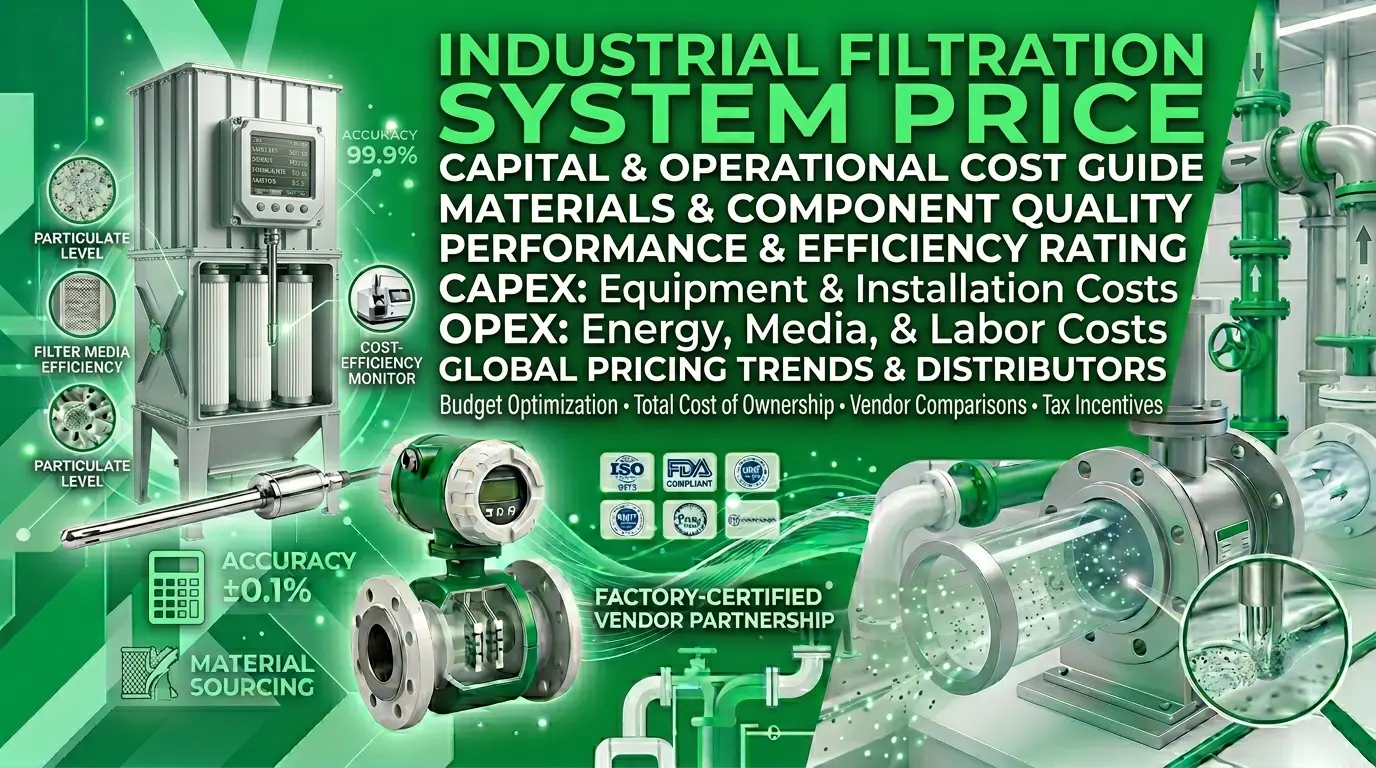
For procurement managers, engineering directors, and factory operations leads, upgrading plant hardware requires a clear understanding of financial variables. When looking into the market, evaluating the industrial filtration system price structures involves much more than just looking at the initial capital expenditure.
A low upfront cost can sometimes disguise high ongoing maintenance expenses, frequent cartridge change-outs, and excessive energy consumption. Conversely, an optimized capital investment can drastically reduce your plant’s long-term operational costs. This deep-dive guide breaks down the primary engineering variables that dictate the industrial filtration system price and helps your financial team build an accurate total cost of ownership model.
The Primary Drivers of Industrial Filtration System Price
No two industrial manufacturing lines are identical, which means industrial filtration equipment is rarely a one-size-fits-all product. Suppliers calculate the overall industrial filtration system price based on specific technical boundaries required by your factory infrastructure.
Critical Cost Variables in System Engineering
When requesting a quote from industrial suppliers, several key design choices will heavily shift the baseline industrial filtration system price:
- Flow Volumetric Demand: The total volume of fluid or air that must pass through the purification matrix per minute. Higher flow requirements demand larger pressure vessels and expansive internal manifolds.
- Structural Metallurgy and Materials: Systems built with basic plastics or carbon steel are cost-effective but short-lived. Upgrading to high-grade stainless steel or specialized anti-corrosive alloys for chemical handling increases the base industrial filtration system price but prevents premature asset failure.
- Automation and Controls: Manual filter housings carry a lower entry price but demand heavy employee hours. Integrating fully automated Programmable Logic Controller systems raises the upfront equipment cost while lowering your weekly plant labor spend.
Procurement Analysis: Capital vs. Operational Expenses
To make an informed budgeting decision, your engineering team must look at the balance between initial purchase costs and long-term utility draw.
Capital Expenditures (CAPEX)
This includes the physical hardware, custom skid fabrication, sensory instrumentation, control panels, and the initial set of filter media. Shipping, site civil works, and professional piping integration also fall under this initial investment umbrella.
Operational Expenditures (OPEX)
The ongoing cost of running the equipment. High-efficiency filtration units minimize these costs by reducing the frequency of membrane replacement, optimizing chemical cleaning intervals, and utilizing energy-efficient feed pumps that lower plant electricity bills.
Equipment Cost Architecture Matrix
To help your finance department evaluate proposals, this table outlines how different system types influence the overall industrial filtration system price layout:
| System Engineering Type | Initial Purchase Price | Replacement Media Cost | Primary Financial Benefit |
| Manual Bag Filters | Economical Entry Level | Frequent Ongoing Bag Purchases | Lowest initial investment for batch operations |
| Multi-Cartridge Vessels | Moderate Capital Investment | Periodic Cartridge Swaps | High precision capture with manageable footprint costs |
| Automatic Self-Cleaning | Higher Upfront Cost | Negligible Consumable Expenses | Lowest long-term labor cost and zero downtime losses |
| Membrane Purification | Premium System Pricing | Extended Lifetime Membrane Elements | Ultimate fluid purity levels for critical processes |
Compliance, Sizing Errors, and Financial Risk
Choosing an inadequate system solely based on a low industrial filtration system price tag introduces severe operational risks to your plant asset management. Sourcing uncertified hardware can lead to costly consequences:
- Downstream Equipment Damage: Fine particle bypass from an undersized filter can destroy high-pressure pumps and block heat exchanger tubes, leading to massive repair bills.
- Regulatory Compliance Fines: Inadequate wastewater filtration can lead to regulatory environmental penalties if effluent discharge exceeds local chemical thresholds.
- Pressure Drop Inefficiencies: Poorly engineered systems create high restriction, forcing your main utility motors to run at maximum capacity, spiking monthly power consumption.
Industry Insight: “Over-engineering a system wastes valuable capital that could be used elsewhere, while under-engineering to save on the initial industrial filtration system price routinely doubles maintenance costs within the first year of operation.” — Lead Process Procurement Consultant
Real-World Case Study
“We initially prioritized the lowest equipment quote for our process water loops. Within months, the manual filter change-out labor and frequent production stalls wiped out all our initial savings. We eventually switched to an automated solution, which paid for itself through drastically reduced operational overhead.” — Yusuf A., Plant Operations Director
Optimize Your Investment: Hebron Perkasa Mandiri
Navigating the variables of equipment pricing requires a partner that balances technical excellence with commercial transparency.
Hebron Perkasa Mandiri stands out as a leading provider of comprehensive Industrial Fabrication & Maintenance solutions. As a trusted distribution and engineering partner, they help your procurement team navigate the complexities of the industrial filtration system price landscape.
Instead of pushing generic catalog items, their engineering specialists conduct thorough process fluid audits, map out your long-term flow requirements, and provide tailored quotes that protect both your current budget and future operational goals. Maximize your plant’s filtration efficiency and secure an accurate project estimate by consulting with their industrial sizing specialists today.
Frequently Asked Questions (FAQ)
What main factors cause variations in the industrial filtration system price?
The price fluctuates based on the required flow capacity, the level of automated cleaning controls, the chemistry of the fluid being treated, and the specific metals used to construct the pressure vessels and internal piping.
Why does an automated self-cleaning filter have a higher initial price than manual options?
Automated systems include electronic control panels, differential pressure sensors, and automatic flush valves. While this increases the initial hardware cost, it eliminates manual labor and production downtime, leading to a lower total cost over time.
How does fluid compatibility affect the overall cost of filtration housing?
Aggressive chemicals, acids, or high-temperature fluids require specialized corrosion-resistant materials like high-grade stainless steel alloys or advanced internal polymer linings, which increases the material fabrication cost compared to standard housings.
Is the cost of the initial filter media included in the system quote?
Yes, standard professional quotes from reputable vendors typically include the first full set of operational filter media, whether they are bags, cartridges, or membrane elements, along with all necessary sealing gaskets.
How can I get an accurate, customized industrial filtration system price for my plant?
You can contact the engineering sales department at Hebron Perkasa Mandiri. As a full-service provider of Industrial Fabrication & Maintenance solutions, their team reviews your specific process parameters to provide a detailed, itemized financial quotation tailored to your operational needs.

Related Posts
Juli 13, 2026
SUTO Distributor and Reseller: Premium Industrial Solutions
In modern industrial facilities, monitoring the efficiency and purity of compressed air and gas systems…
Juli 13, 2026
Industrial Digital Power Measurement Tools: The Definitive Guide to Energy Intelligence and Efficiency
In modern industrial facilities, energy is one of the highest operational costs. For electrical engineers,…
Juli 6, 2026
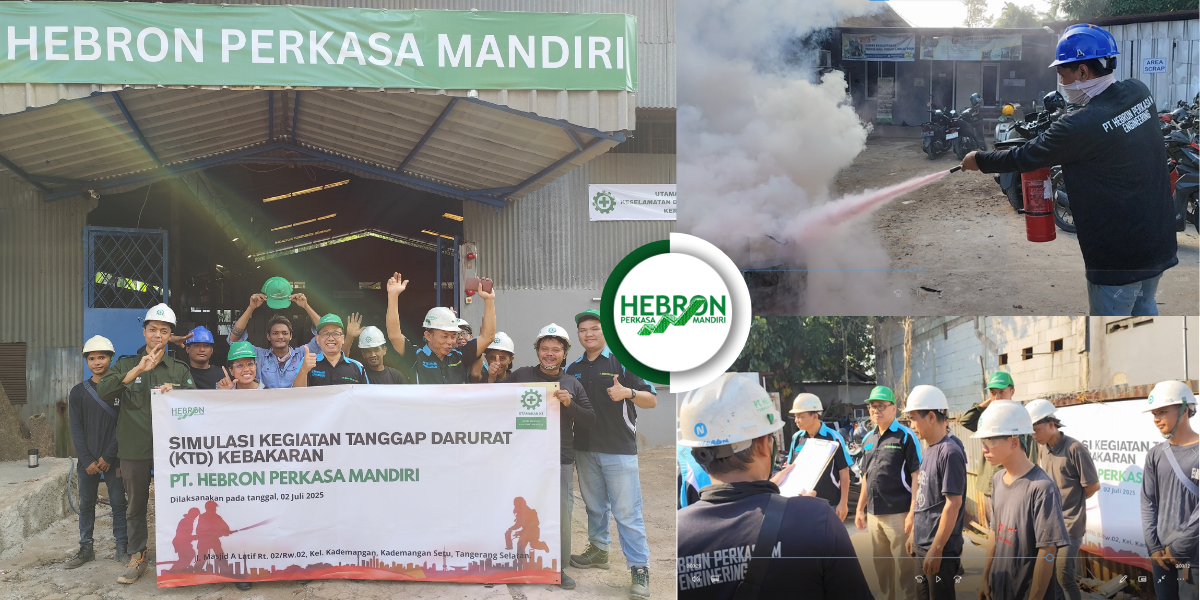
Simulasi Keadaan Tanggap Darurat (KTD) Kebakaran PT Hebron Perkasa Mandiri Perkuat Budaya K3 di Lingkungan Kerja
Tangerang Selatan, 2 Juli 2025 – PT Hebron Perkasa Mandiri menyelenggarakan Simulasi Keadaan Tanggap Darurat…
Juli 6, 2026
PT Hebron Perkasa Mandiri: Authorized Distributor Donaldson & Nederman | SUTO iTEC Partner
PT Hebron Perkasa Mandiri merupakan Authorized Distributor Donaldson dan Nederman serta SUTO iTEC Partner yang…